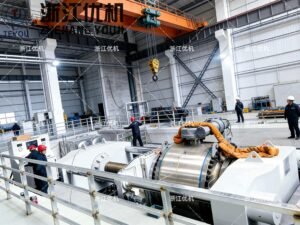
Detailed Explanation of the Types, Applications and Features of Valve Grinding Machines
1. Main Types of Valve Grinding Machines (Classified by Application Scenario, Purpose and Grinding Method)
1.1 Classification by Application Scenario (Most Common)
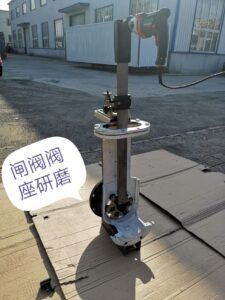
Portable Valve Grinding Machine
Compact, lightweight and easy to carry, designed specifically for on-site maintenance. It mainly solves the repair of welded, overweight and non-removable valves. No complicated supporting equipment is needed; installation is simple and it quickly adapts to narrow and complex on-site working environments. It is commonly used for on-site valve repair in petroleum, chemical and other industries.
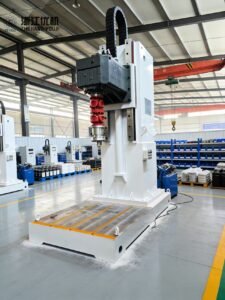
Bench-Type Valve Grinding Machine
Mainly used for fixed workshop operations, for batch and high-precision grinding of disassembled valves. Stable in structure and highly automated, it supports long-term continuous operation. It is suitable for centralized maintenance in valve manufacturers and professional repair workshops, enabling precise control of grinding accuracy.
1.2 Classification by Grinding Object / Application
General-Purpose Grinding Machines
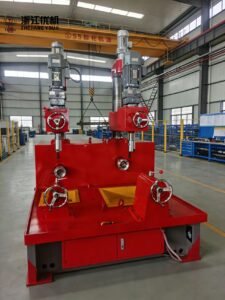
Suitable for various valve types, including gate valves, globe valves, ball valves, plug valves, safety valves and others. Among them, plug valve grinding machines are dedicated to grinding conical sealing surfaces of plugs and bodies; gate valve grinding machines repair gate discs and seats for various nominal diameters. General-purpose models meet diverse grinding needs in conventional industrial scenarios.
Special-Purpose Grinding Machines
Custom equipment for specific industries and valves:
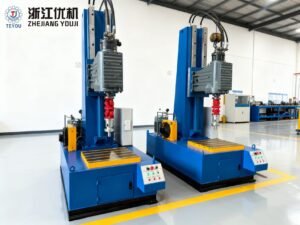
- High-Pressure Flange Grinding Machines: Mainly used in the fertilizer industry to repair lens-pad pipeline flanges and valve flanges in ammonia and urea plants, delivering high repair efficiency and ensuring system sealing and safety.
- Octagonal Gasket Flange Grinding Machines: Used in petroleum refining and natural gas industries for grinding pipeline flanges and valve flanges connected with octagonal gaskets. Available in fixed or portable designs for easy and efficient operation.
- Power Plant Special Grinding Machines: Such as steam turbine main steam valve grinders and high/low pressure bypass valve grinders, adapted for special valves in high-temperature and high-pressure power plant environments.
1.3 Classification by Grinding Method
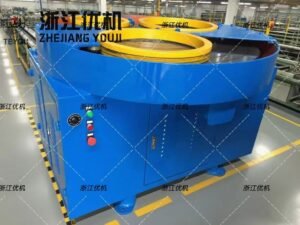
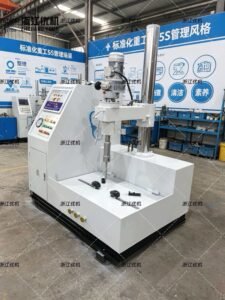
Planetary Grinding Machine
Suitable for grinding sealing surfaces of discs, seats and gates. It can grind multiple workpieces simultaneously with high efficiency, delivering excellent geometric accuracy and surface finish. Workpieces rotate and swing around the center driven by the grinding plate, creating uniform and complex grinding paths for batch processing.
Vibratory Grinding Machine
Ideal for grinding sealing surfaces of small and medium-sized globe valves and check valve discs. It can process dozens of parts at once with high productivity. The grinding plate features high frequency and small amplitude; the relative motion between workpiece and plate changes continuously for uniform grinding and low plate wear.
Swing-Shaft Grinding Machine
Designed specifically for grinding body sealing surfaces and also applicable to gates and seats. It produces ideal grinding paths, suitable for small valve factories and repair departments. For large valves, it can be flexibly installed and perform grinding in a progressive manner.
Multi-Spindle Body Grinding Machine
Used for sealing surface grinding of small globe valves, imitating manual grinding motion. It can grind up to 120 valve bodies simultaneously, offering extremely high efficiency for mass production.
2. Core Applications of Valve Grinding Machines
2.1 Maintenance and Refurbishment (Primary Application)
2.2 Production and Processing
2.3 Special Scenario Adaptation
3. Core Features of Valve Grinding Machines (General + Type-Specific)
3.1 General Features of All Valve Grinding Machines
- High Grinding Precision: Accurately removes micro-defects, scratches and wear, ensuring required flatness and finish for leak‑free sealing. Some machines achieve high surface roughness grades.
- Stable Transmission & High Torque: Rational drive design (e.g., gear transmission) ensures smooth power delivery with minimal vibration. High torque handles hard sealing materials, reducing failures in long‑term use.
- Easy Adjustment: Grinding parameters, head angle and position are flexible to adapt to different valve sizes, materials and requirements. Some models quickly switch between electric/pneumatic drive or grinding/polishing functions.
- High Efficiency & Low Cost: Greatly outperforms manual grinding (portable models: 10–30× faster), shortening repair/production cycles and reducing downtime. “Repair and reuse” cuts replacement costs.
- User-Friendly Operation: Most models feature ergonomic design with low learning curves; basic training enables safe operation. Automated models use control systems for precise, consistent results with minimal human error.
3.2 Type-Specific Features
- Portable: Small, lightweight, easy to transport and install. Supports on-site work without valve removal, ideal for confined spaces. Some support multiple drive modes for explosive‑atmosphere applications.
- Bench-Type: Stable structure, high automation, suitable for batch grinding with consistent precision. Equipped with cooling systems for long‑term workshop use in mass production or centralized repair.
- Special-Purpose: Highly targeted for industry-specific conditions (high pressure, explosion proof, high temperature). Superior efficiency and compatibility for dedicated applications.
- Automated: Equipped with PLC or DCS control for stepless speed regulation and programmable parameters. Supports unattended operation, reduces human error and ensures consistency. Some models support data monitoring and upload.